Neo-Classical Interiors: Bringing Timeless Luxury into a Modern Home
Panelled walls, soft symmetry and a chandelier that catches the light — neo-classical design brings timeless elegance home without feeling dated. Here’s how to get it right.
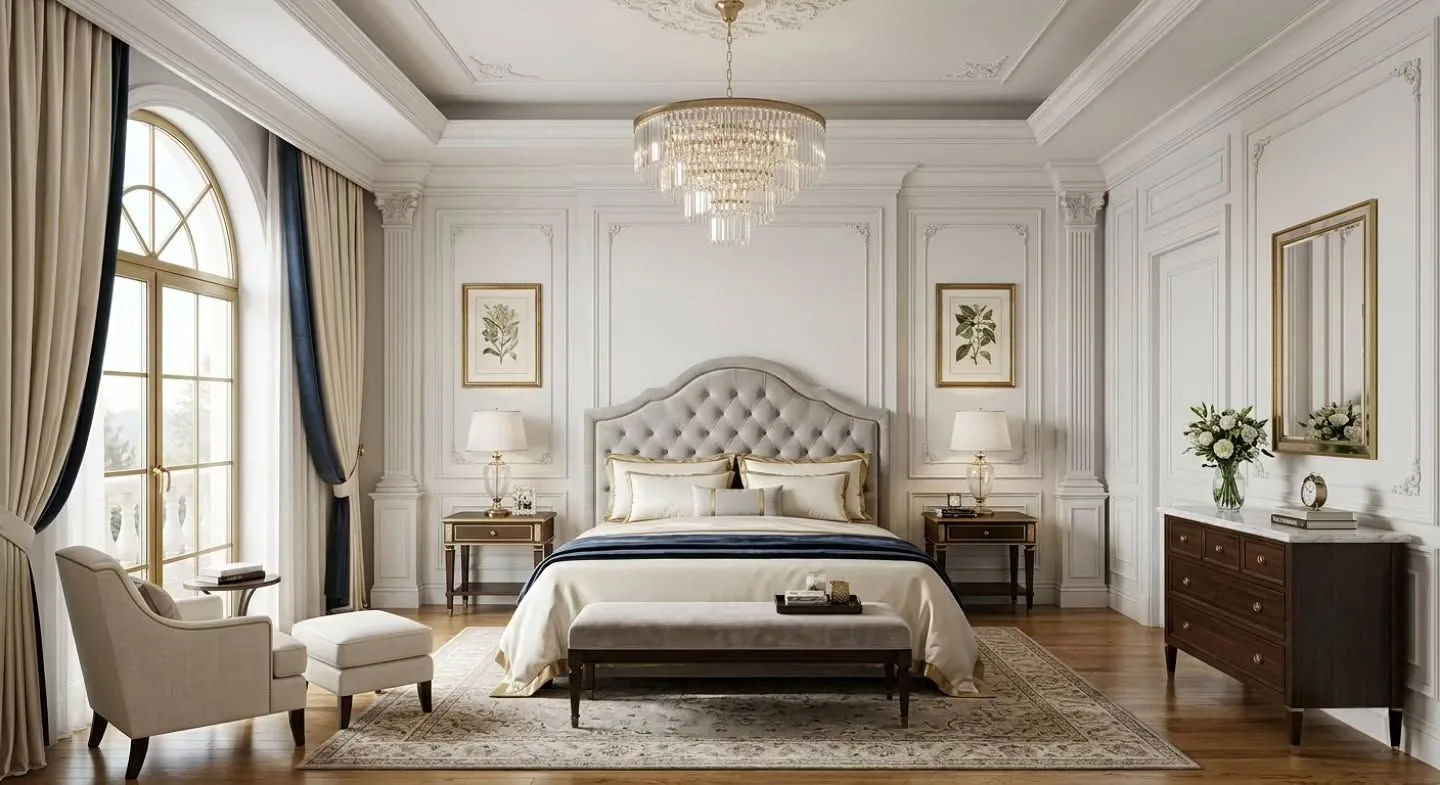
Neo-classical design borrows the proportions, mouldings and symmetry of classical architecture and pairs them with the comfort and restraint of modern living. Done well, it feels elegant rather than ornate — a home that looks as considered in twenty years as it does today.
What defines a neo-classical interior?
- Wall panelling and mouldings that add depth and rhythm to plain walls
- Symmetry — a bed or sofa centred on a wall, matched bedside tables and lamps
- A calm, layered palette of ivory, greige and soft neutrals, often with one deep accent such as navy or emerald
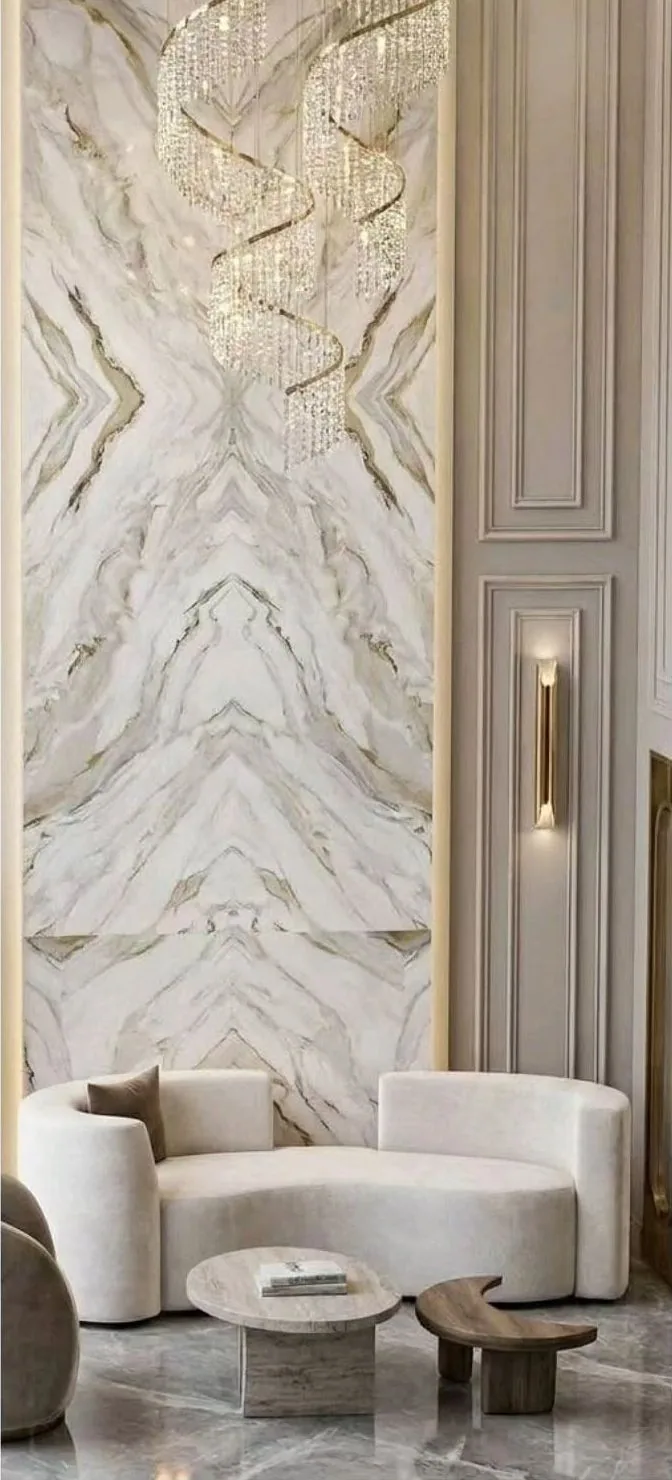
- Statement lighting — a crystal or brass chandelier as the room’s jewellery
- Quality fabrics: velvet headboards, linen curtains and textured rugs
Start with proportion
Classical rooms feel calm because their proportions are balanced. Before choosing a single finish, we look at ceiling height, window placement and where the eye lands as you enter. Panelling is then set out so that frames align with windows, doors and furniture — that alignment is what separates a luxurious room from a busy one.
Keep the palette quiet
Neo-classical interiors rely on light and shadow playing across mouldings, so busy colours work against them. Warm whites and soft greige let the detailing speak. Add depth with one considered accent — a navy velvet headboard, deep walnut furniture or brass details.
Light it in layers
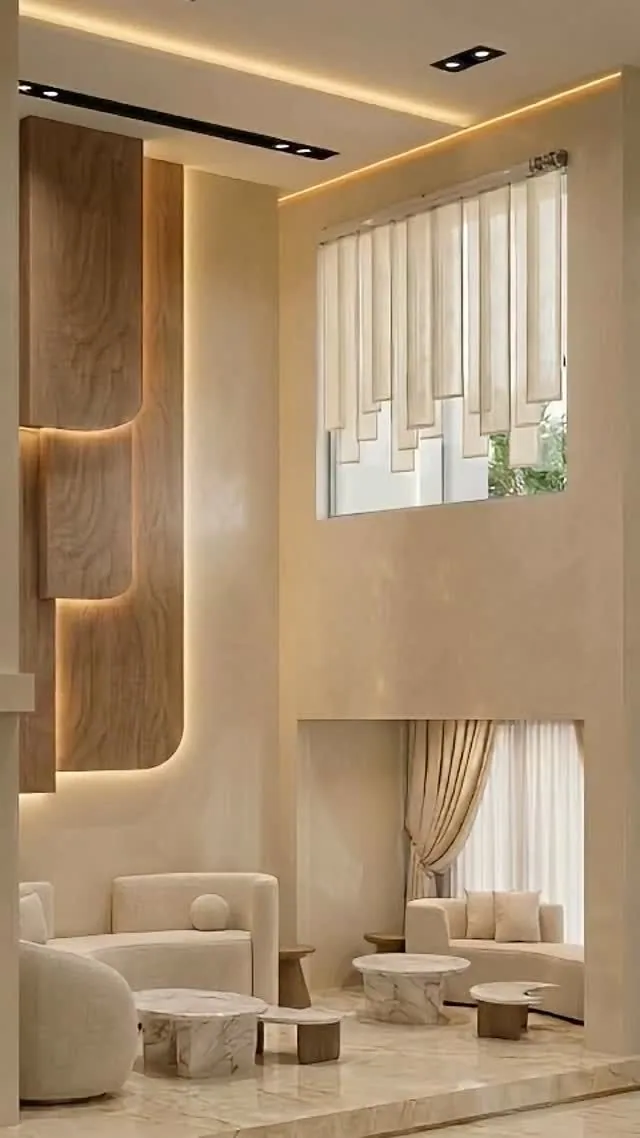
A chandelier sets the mood, but it shouldn’t work alone. Combine it with cove lighting in the ceiling, wall sconces at eye level and bedside lamps for reading. Layered lighting brings out the texture of panelling and lets the room shift from bright and fresh by day to warm and intimate at night.
Make it modern
What makes it neo-classical is restraint. Avoid heavy gold everywhere, keep furniture silhouettes clean, and let one or two pieces be the focus. Integrate modern comforts — concealed storage, sensor lighting in wardrobes, a discreet workspace — so the room is as practical as it is beautiful.
Classic or neo-classic? The answer is usually in the details — restraint is what keeps a traditional room feeling fresh.
Where to begin
The master bedroom and the formal living room are natural places to introduce neo-classical elements. If you’re unsure how far to go, ask your designer for 3D views of two versions — one fully panelled, one with a single feature wall — and compare them side by side.